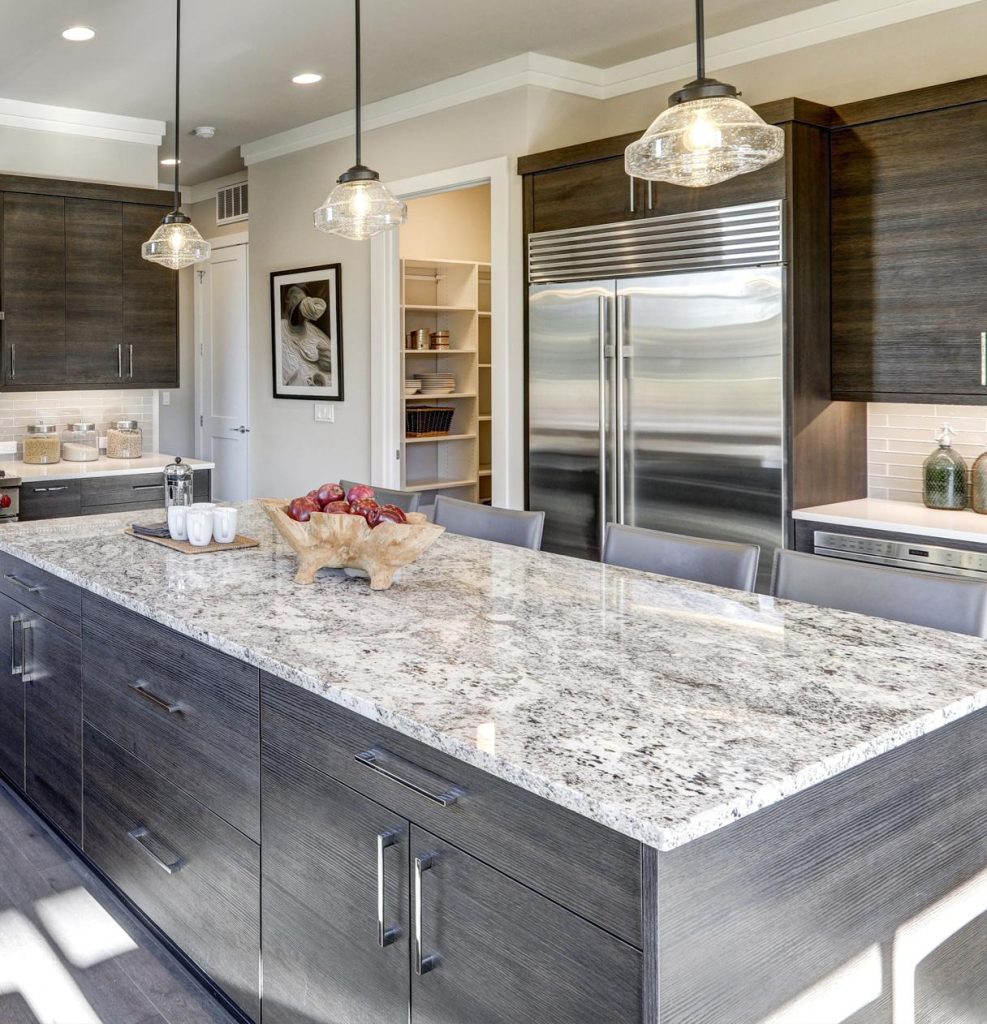
Countertops · Granite
Granite Countertops
Granite is 100% natural igneous stone, prized for its longevity, heat resistance, and one-of-a-kind veining — no two slabs are ever identical. Budget-friendly relative to other natural stones, it remains one of the most popular surfaces for kitchens and baths.
How granite performs
The honest pros and cons.
General material facts the way buyers research them — so you can match the right surface to the right room before you commit.
- Durability
- Excellent — one of the hardest natural stones, highly scratch- and chip-resistant.
- Maintenance
- Moderate — porous, so it should be sealed at installation and resealed periodically (typically every 1–3 years).
- Heat resistance
- Excellent — handles hot cookware directly; trivets are still recommended to protect the sealer.
- Cost
- Typically about $40–$100+ per sq ft installed (typical market range, not a GBC quote); mid-grade granite sits at the lower end, exotic slabs higher.
Pros
- Natural, unique veining — every slab is one of a kind
- Very heat-resistant and hard to scratch
- Generally the most budget-friendly natural-stone option
- Long lifespan when sealed and cared for
Things to know
- Porous — needs periodic sealing to resist stains
- Heavy slabs require sturdy, level cabinetry and professional installation
- Color and pattern vary slab to slab, so seams and matching take planning
- Can chip at unsupported edges if struck hard
Best for
Homeowners who want a durable, heat-resistant natural surface with distinctive veining at a more accessible price point.
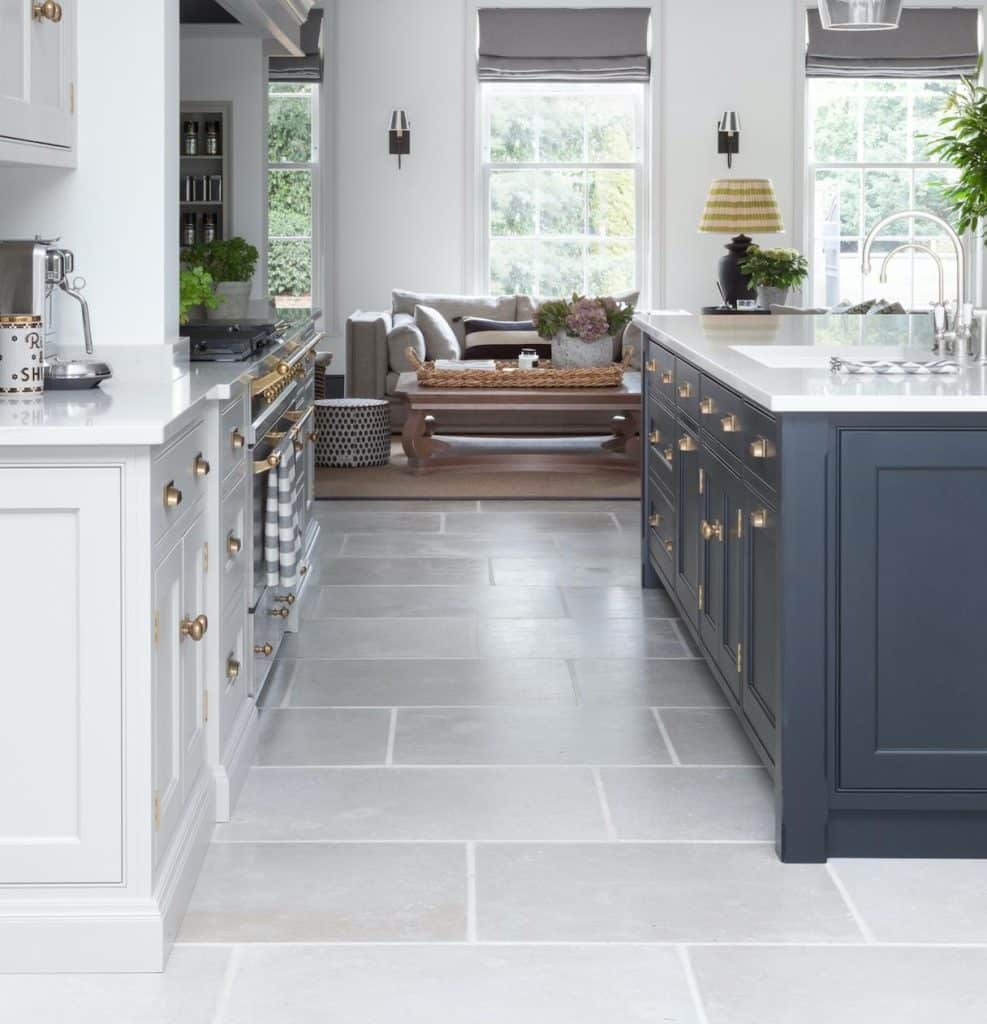
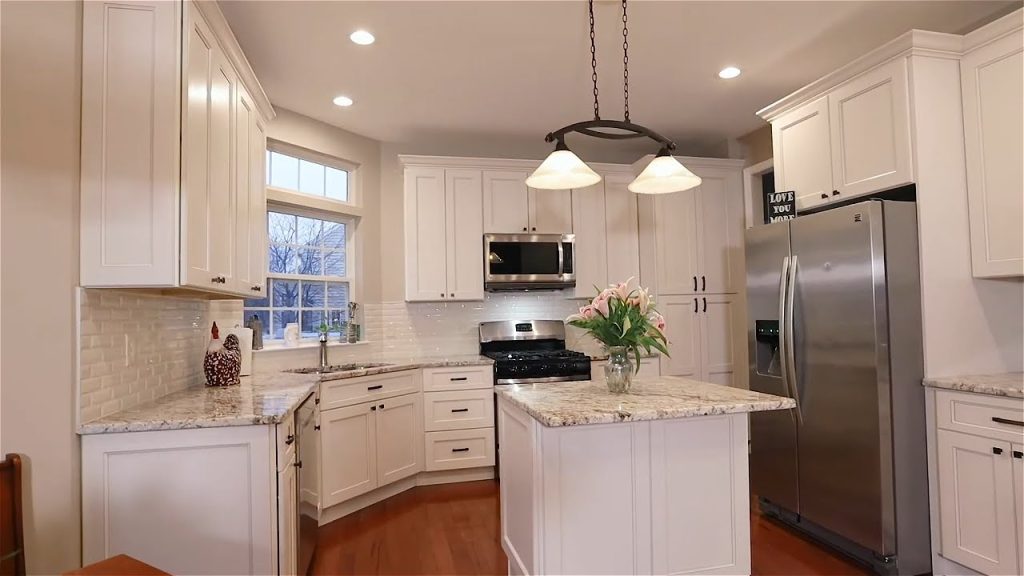
See it in stone
Granite in real kitchens & baths

Good to know
Granite countertops: common questions
Do granite countertops need to be sealed?
Yes. Granite is a porous natural stone, so it should be sealed when installed and resealed periodically — commonly every one to three years, depending on the specific stone and how heavily it is used. A simple water-bead test tells you when it is time to reseal.
Is granite heat-resistant?
Granite is highly heat-resistant and can briefly tolerate hot cookware placed directly on it. Even so, using trivets and hot pads is recommended, because repeated thermal shock or hot pans can degrade the sealer over time.
How does granite compare to quartz?
Granite is 100% natural stone with unique veining and excellent heat resistance, but it is porous and needs sealing. Quartz is engineered from ground stone and resin — it is non-porous, never needs sealing, and offers more uniform color, but it is less heat-tolerant than granite.
How long do granite countertops last?
With proper sealing and care, granite countertops can last for decades and often outlive the kitchen they are installed in. The biggest factors in longevity are quality installation on level, supportive cabinetry and keeping the surface sealed.
Our designers fabricate and install granite in our own modern plant — and can help you match the right stone to the right room. Talk to a specialist before you commit.
Let's Get Started
We’re here to transform
your house.
Get a free consultation with our design experts. Visit one of our four showrooms or schedule a virtual meeting today.