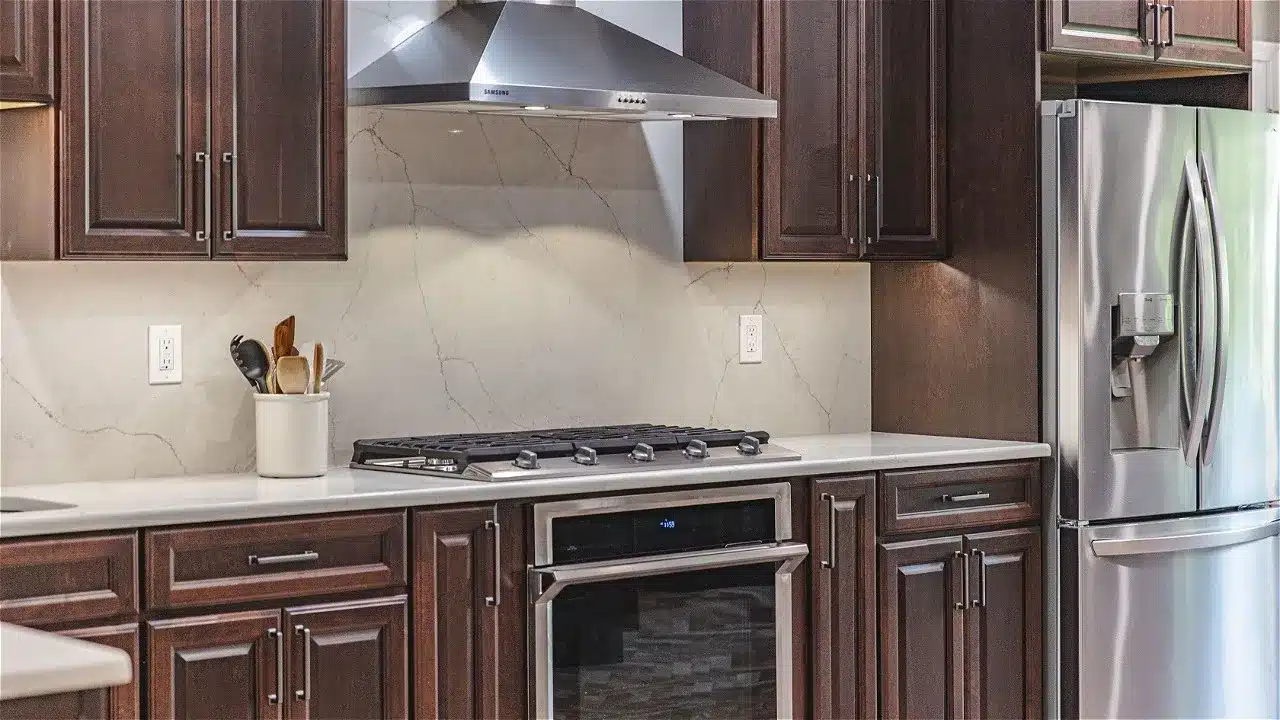
Cabinet Door Style
Transitional Kitchen Cabinets
Transitional is the in-between style — and the most popular direction in kitchens today. It blends the warmth and comfort of traditional design with the clean lines and simplicity of modern design, so it never feels too ornate or too cold. In practice that usually means a Shaker or simplified door, a calm neutral palette, and a mix of materials and finishes — a little wood, a little painted cabinetry, a statement stone — balanced so nothing competes. The result is a kitchen that feels current but is built to age gracefully.
What defines the style
How to recognize transitional kitchen cabinets.
The features below are general design facts the way buyers research them — so you can tell this door style apart from the others before you choose. Your GBC designer can show you each one in person.
- A deliberate balance of traditional warmth and modern, clean-lined simplicity
- Most often built on a Shaker or simplified flat door that leans neither rustic nor stark
- Neutral, layered palettes — whites, greiges, soft woods, and a single deeper accent
- Mixed materials and finishes, used sparingly so the room stays calm and cohesive
- Reads current today but is designed to age gracefully rather than date quickly
Is it right for your kitchen?
Who it suits — and how to pair it.
Best for
Homeowners who cannot decide between traditional and modern — and do not have to. Transitional is also the safest resale-friendly direction, since its restrained, neutral foundation appeals to the widest range of buyers and adapts easily as decor changes over time.
Pairs with
Transitional kitchens favor a calm, layered mix. Pair a Shaker door in white or greige with a quartz or quartzite counter that has subtle movement, and add warmth with a wood island or open shelf. Hardware bridges both worlds — brushed gold, matte black, or satin nickel in clean shapes. Wide-plank wood or warm large-format tile keeps the floor grounded and neutral.
Kitchens we've built
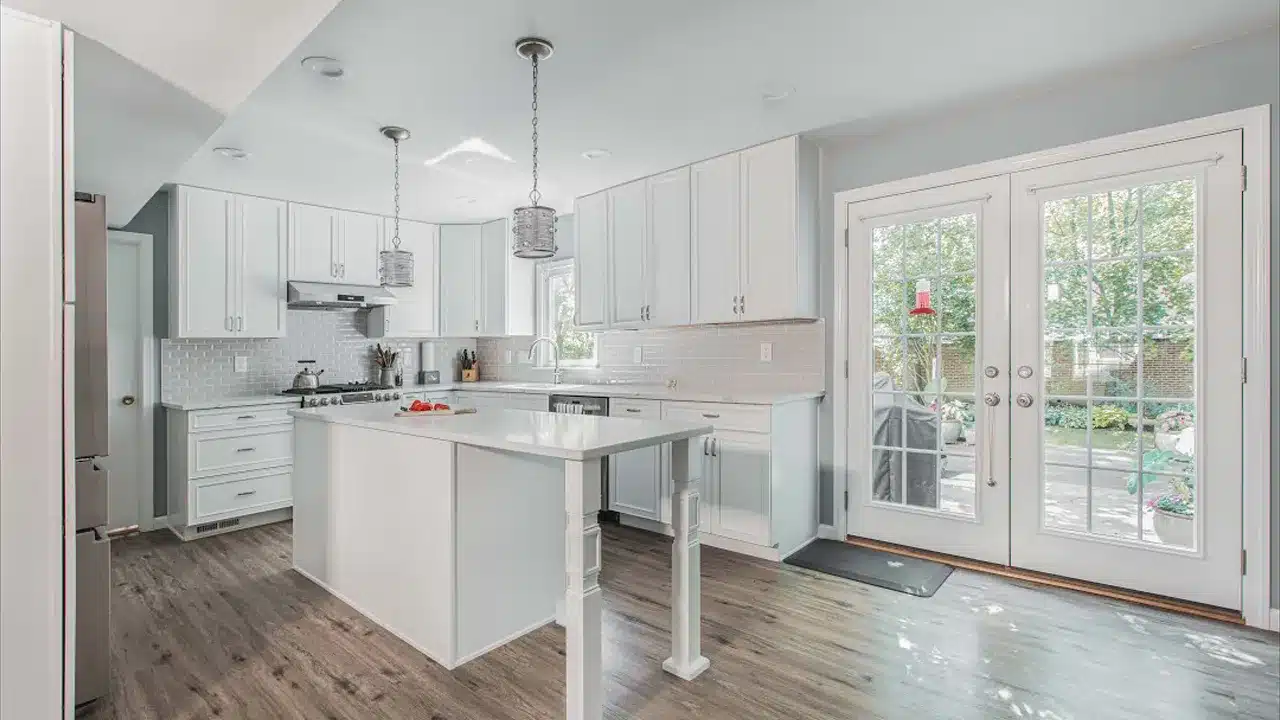
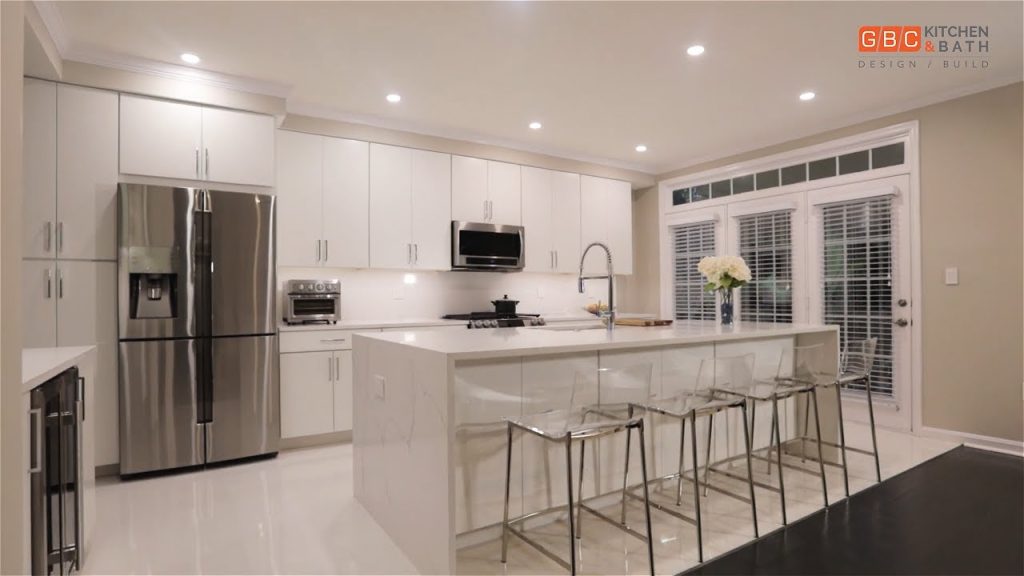
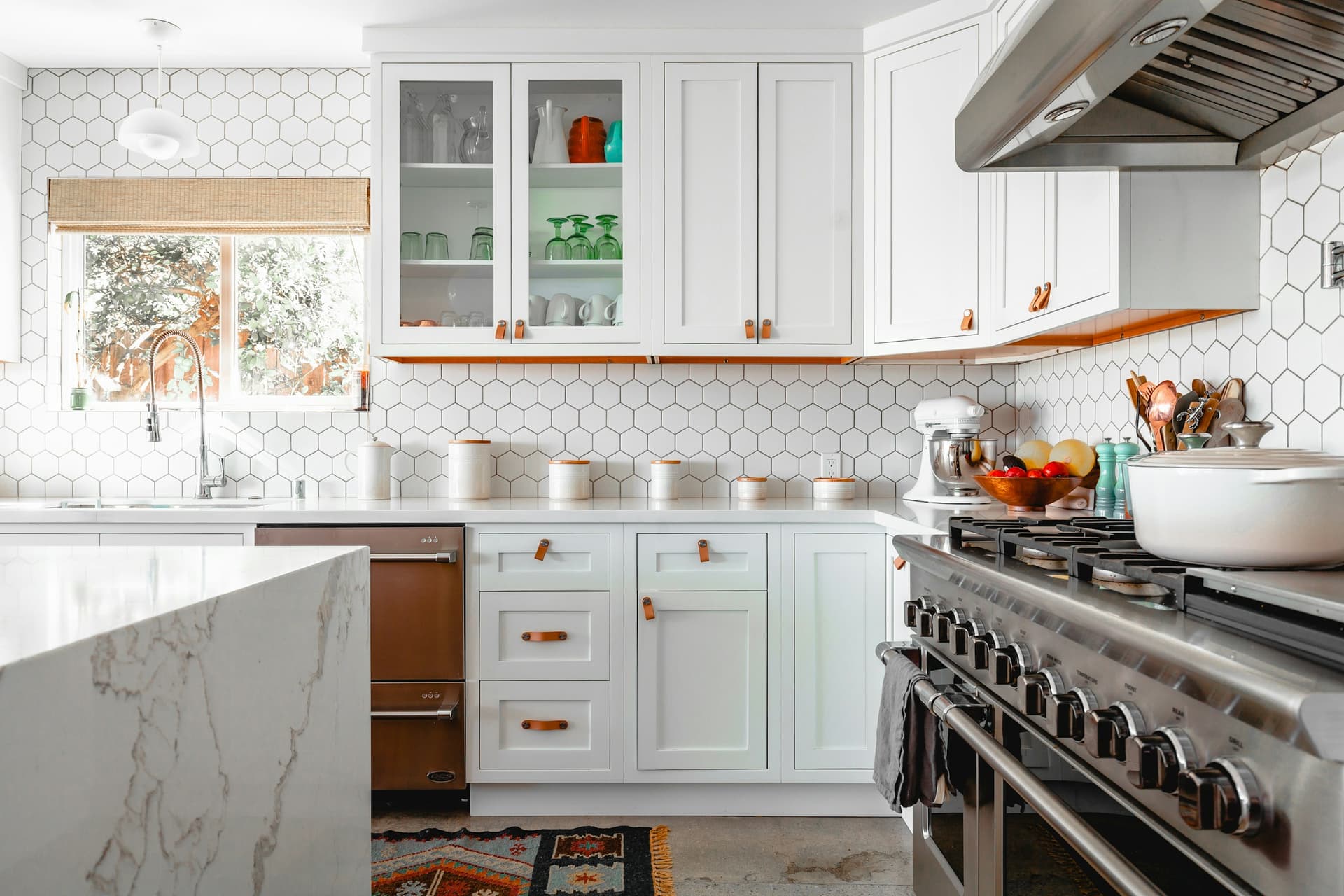
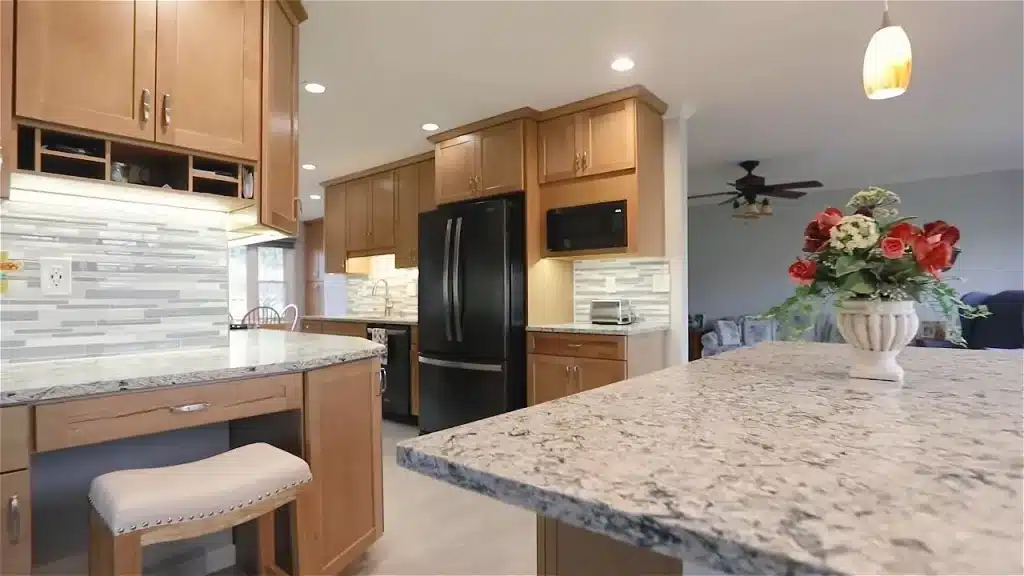
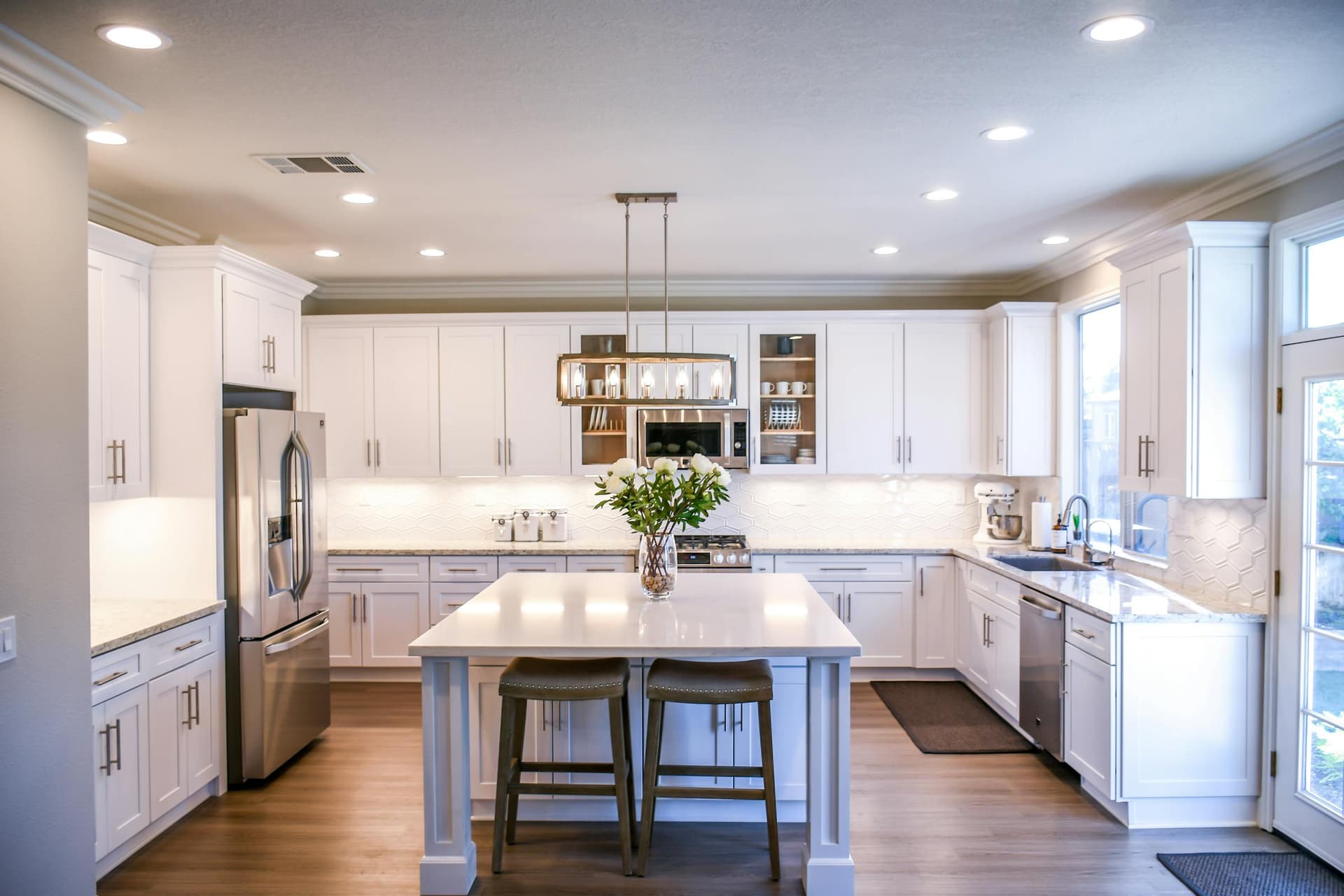
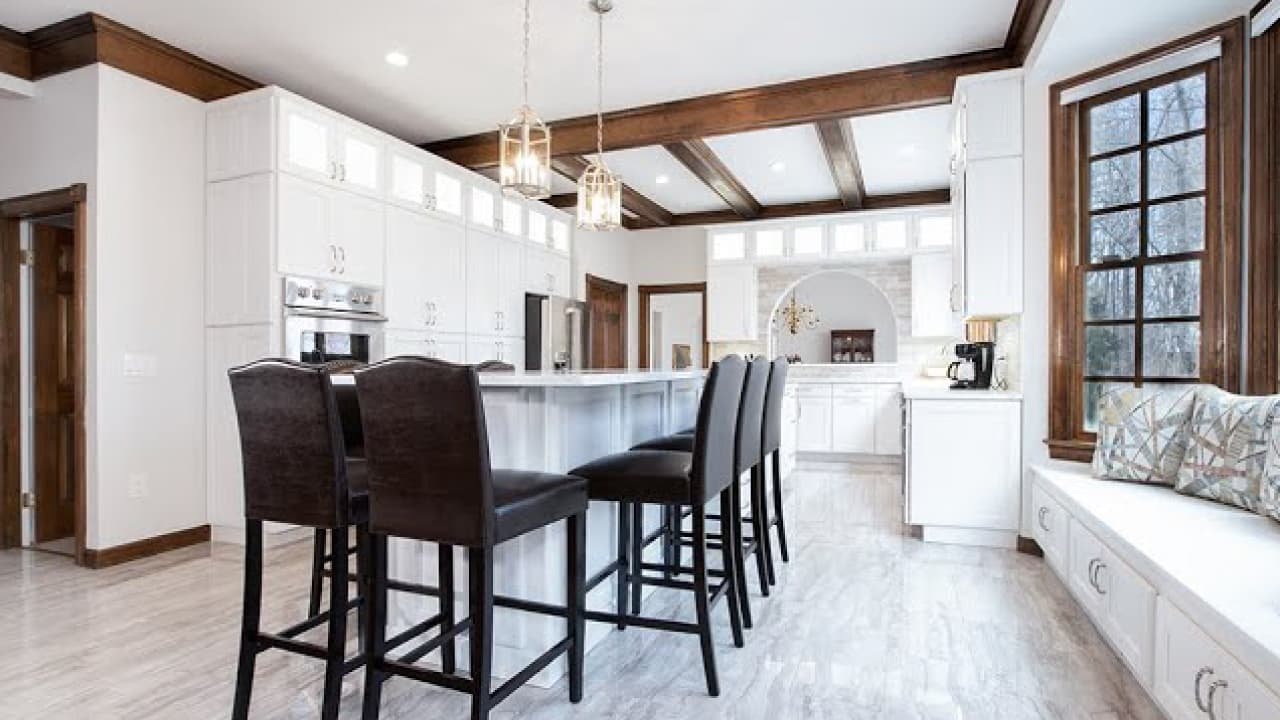
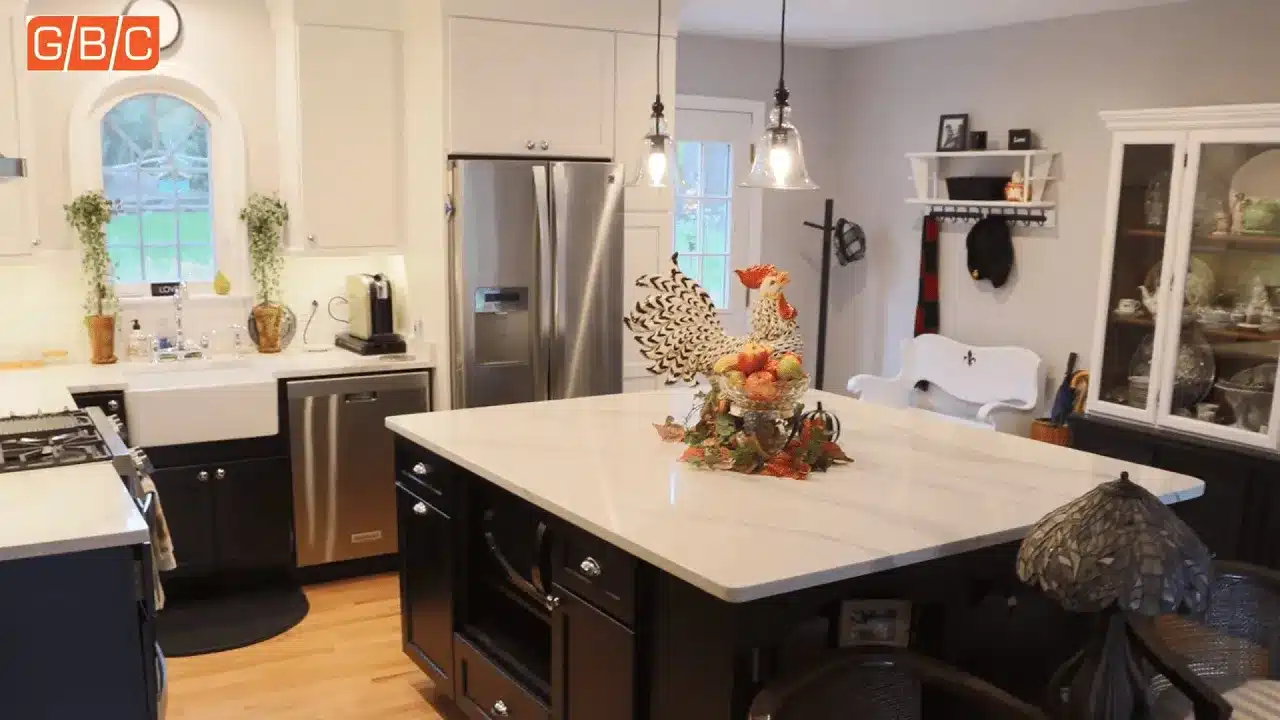
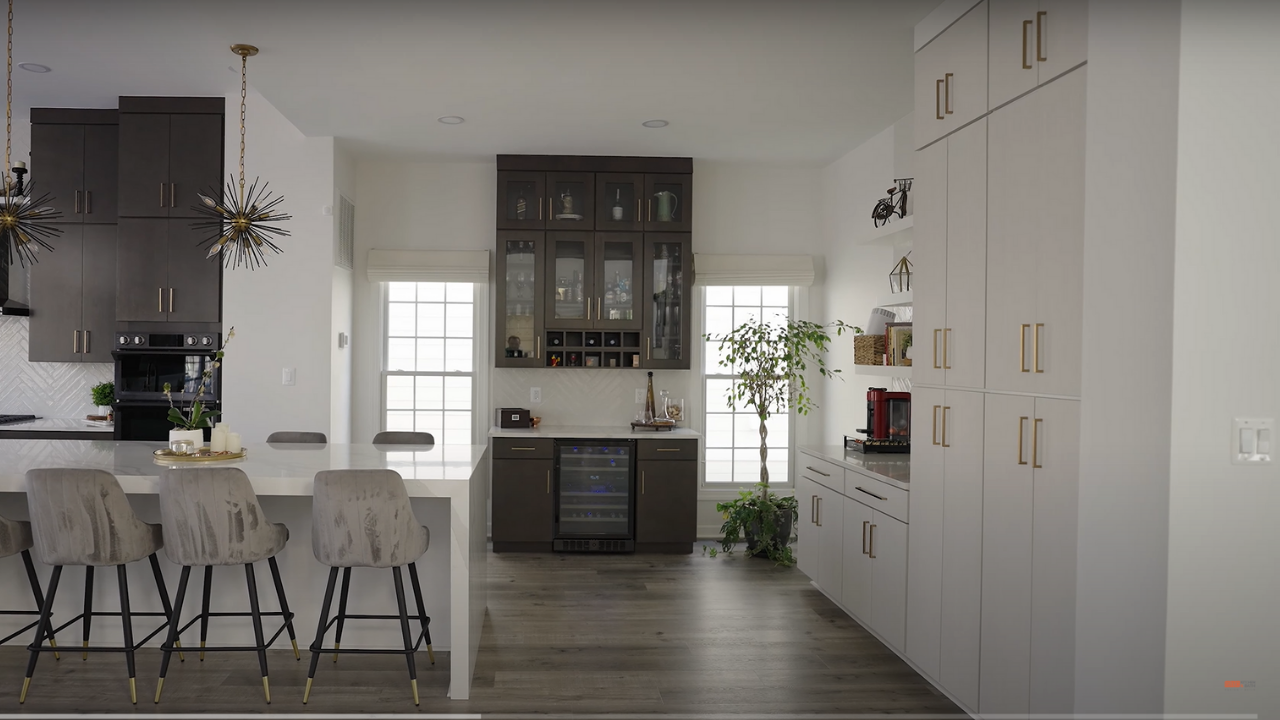
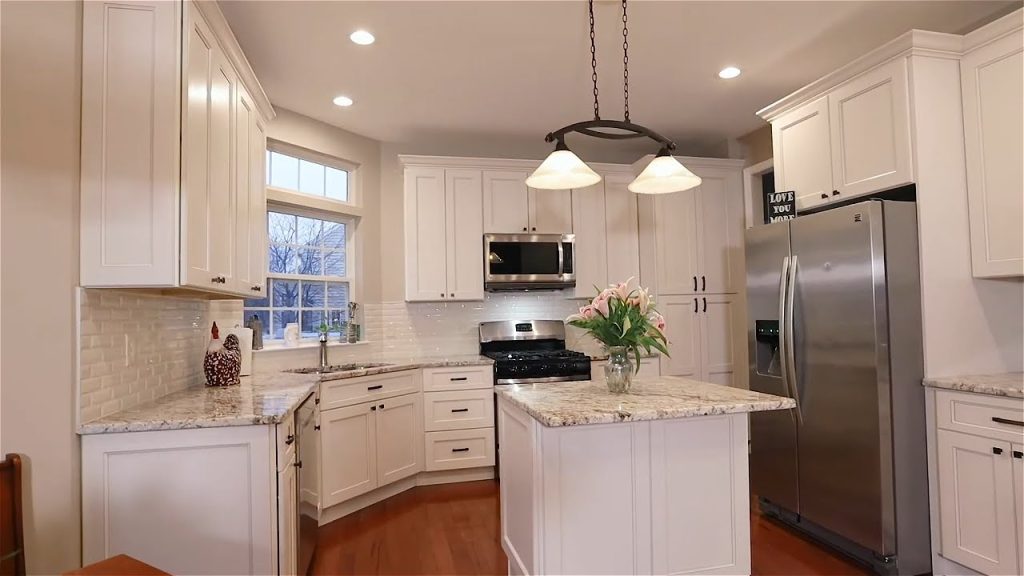
GBC kitchens, installed in the DMV (8 photos)
A look at completed GBC kitchen remodels across Northern Virginia, Maryland, and Washington DC — installed by our own crews and backed by our 3-year workmanship warranty.
Good to know
Transitional Kitchen Cabinets: common questions
What is a transitional kitchen?
A transitional kitchen blends traditional and modern design so it feels balanced rather than committed to either extreme. It typically combines a clean door style — often Shaker or a simplified profile — with a neutral, layered color palette and a restrained mix of materials and finishes. The goal is a warm but uncluttered space that looks current without being trendy.
Is transitional the same as Shaker?
Not quite — they describe different things. Shaker is a specific door style (a recessed flat panel in a square frame). Transitional is an overall design direction that blends traditional and modern. They overlap constantly because the simple, versatile Shaker door is the most common choice for achieving a transitional look, but you can also build a transitional kitchen with a simplified flat-panel or other clean door.
Why is transitional style so popular?
Transitional is popular because it removes the pressure of choosing between traditional and modern — it takes the comfort and warmth of one and the clean simplicity of the other. Its neutral, layered foundation suits almost any home and appeals to the broadest range of buyers, which also makes it a smart, resale-friendly direction. Because it avoids extreme trends, a transitional kitchen tends to age well.
Does GBC offer transitional cabinets?
Yes. Transitional cabinets are available across the cabinet lines GBC Kitchen & Bath carries — Medallion, Forevermark, Waypoint, Fabuwood, Design-Craft, and Legacy — each of which offers multiple door styles and finishes, so we can supply a transitional look in the color and material that fits your project. The best way to choose is to see the doors in person: bring your ideas to any of our four DMV showrooms (Alexandria, Rockville, Ashburn, and Columbia), and our designers will help you match the door style, finish, and hardware. Every kitchen is installed by our own in-house crews — no subcontractors — and backed by our 3-year workmanship warranty. GBC has served Northern Virginia, Maryland, and Washington DC since 2001.
Compare the looks
Other cabinet door styles
Available across our lines
Transitional Kitchen Cabinets in the brands GBC carries
Each of the six cabinet lines we carry offers multiple door styles and finishes — so we can supply this look in the color and material that fits your project. Explore a brand to see its range.



Let's Get Started
We’re here to transform
your house.
Get a free consultation with our design experts. Visit one of our four showrooms or schedule a virtual meeting today.